
Client / Org
YouTube
Role
User Experience Research, UX Design
Industry
Video hosting services
Highlights
UX prototyping, human-computer interacation
+ Interactive Video

In 2014, YouTube was looking to expand user interaction and engagement with video as part of online viewing. I teamed up with three other designers to research this user experience interest area within the YouTube sphere.
The Challenge
How might we make the YouTube experience more interactive?
My team and I interviewed 18 people (individually or in pairs) about their video watching habits on YouTube and other platforms. The ages of the interviewees ranged from 12 to 49 years, with balanced gender distribution within the group. We asked people to show us their favorite YouTube videos and shadowed them as they browsed. Some major themes emerged from our conversations:
Themes from User Interviews
Ads were a major pain point and would sometimes cause people to abandon their viewing altogether. Talking about an ad that played before a video, one woman emphatically told us, "it’s painful I just want to make it stop."
Referrals from strong or weak ties were noteworthy. Many people arrived at a YouTube video after encouragement from someone else: pulled over to a computer in person, linked to a video in a message from a friend, or seeing it shared on someone’s newsfeed. The browsing experience occurred after the initial video had finished playing; very few interviewees queued up the homepage to browse unless they were searching for a specific video.
The recommended videos after an ended video were a major opportunity area. One teen told us, “You watch one video, and then it gives you a bunch of random videos.” The majority of interviewees expressed frustration with video recommendations, ranging from descriptions of “off-topic” to “inappropriate,” as one mother of toddlers lamented.

When people watch videos together, they seek connection through social affirmation of their emotions.

The moment when a user looks to recommended videos is a crucial tipping point for engagement and future audience retention.

If watching alone, people frequently multitask while viewing YouTube videos
because they feel guilty about the distraction.
Main Insights
Prototype Directions
Our two insights surrounding video recommendations led us to design around human-powered recommendation. The “what to watch next” instant was a pivotal moment. One teen we talked to mentioned that when it came to YouTube recommendations, “it should know what I like to watch.” At the same time, most interviewees were more likely to take a risk on an unknown video if it were recommended by a person they knew.
All of this was embedded in the video "up next" moment:
One chance
Limited attention
Preference expectations

Solution Space


Exisiting YouTube Recommendations
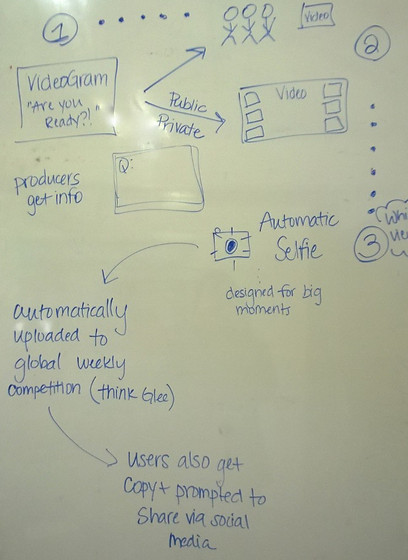
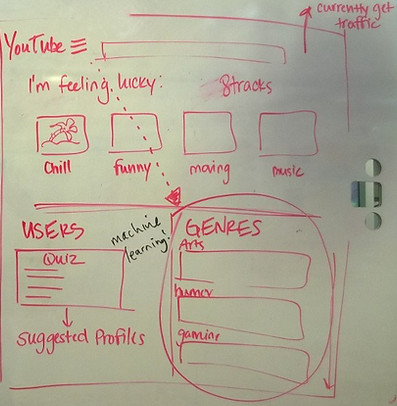
Human-Powered Recommendations: sWatches + Videograms
Outcomes
Our final proposed solutions for human-powered video recommendation were sWatches and Videograms.
Inspired by Adobe's Kuler, in which one color can appear in an unlimited number of unique color schemes, YouTube sWatches allowed for tailored discovery based on human tastes, not necessarily based on browsing data. We envisioned a page dedicated to sWatches where people could discover new sWatches and follow the playlists of power users.
Videograms offered a powerful and persuasive emotional connection in the recommendations. When a friend or family member shared a YouTube link with a video message in the introduction, the personalized curation added meaning to video discovery.
Benefits for Stakeholders
-
YouTube: Stronger audience engagement, emotional connection, users get recommendations of personal fit (happier users), more video sharing / word-of-mouth marketing for YouTube videos
-
Users: Tailored recommendations, new way to share videos, more personalized videos, easier way to explore videos & get recommendations in categories
-
Content producers: Increased likelihood that their content will be found / watched / shared
We presented our findings and documentation to three YouTube product marketing representatives who returned to San Bruno to share our research with the rest of the team.